Skip to content
Fizyoterapist Aydın AliFizyoterapi & Rehabilitasyon

Sciatica Treatment in Bursa

Sciatica is not the name of a disease but of a symptom: pain travelling along the path of the sciatic nerve — from the lower back to the hip, then down the back of the leg to the foot. The same symptom can sit on top of a disc herniation, spinal stenosis, or compression related to the piriformis muscle. What determines treatment is not the pain but its source. In Bursa Nilüfer, Fizyoterapist Aydın Ali makes that distinction first and builds the programme around it.

When is it needed?

  • Pain running from the back into the hip and down the back of the leg
  • Usually affecting one side only
  • Symptoms that increase with coughing, sneezing or straining
  • Numbness or pins and needles in the leg or foot
  • Pain that builds with long sitting and driving
  • Difficulty rising onto the toes or standing on the heel

What we do

  • Neurological examination: muscle strength, reflexes and sensation
  • Identifying which spinal level the pain originates from
  • Establishing which direction of movement eases the symptoms
  • Sciatic nerve gliding (neural mobilisation) exercises
  • Graded strengthening for the hip and trunk muscles
  • Manual therapy and electrotherapy where indicated
  • Sitting setup, driving and daily movement planning

Sciatica in Bursa Nilüfer

Fizyoterapist Aydın Ali provides one-to-one care for sciatica at the clinic in Bursa Nilüfer — in Fethiye Mahallesi, on Kelebek Sokak, at a central point of Nilüfer, opposite the Fethiye covered market.

It is a short trip by car or public transport from İhsaniye, Odunluk, Balat, Özlüce, Ataevler, 23 Nisan and the surrounding areas. Every session is one-to-one, assessment-based and tailored to you.

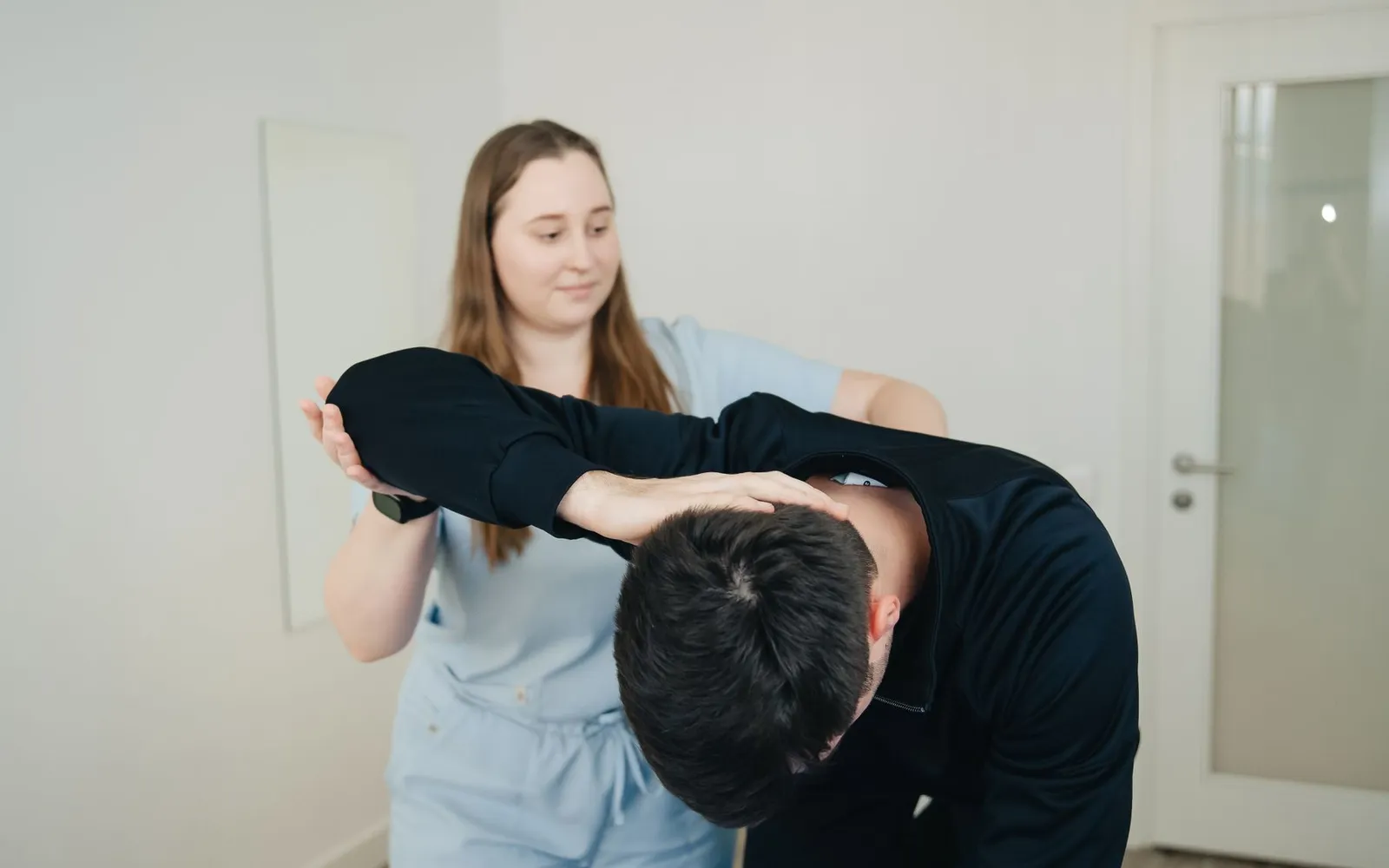
The pain is in the leg, but the source may not be the back

Sciatica isn't a diagnosis, it's a symptom. Pain along the same line can come from a herniated disc, spinal canal narrowing, or the piriformis muscle deep in the hip. The three don't get the same exercises; a movement that helps one can worsen another.

Fizyoterapist Aydın Ali starts the process with this distinction: which movement pulls the pain down into the leg, and which pulls it back toward the back. Pain retreating from the leg toward the back is the most reliable sign of improvement, and the programme is built on that criterion. Manual therapy is used to bring pain under control; the lasting part is exercise.

One pain, three different sources

In disc herniation the disc affects the nerve root; pain typically increases with bending forward and long sitting. In spinal stenosis symptoms build while walking and ease when leaning forward to rest — patients often describe feeling better leaning on a shopping trolley. In a piriformis-related picture the pain starts deep in the buttock and becomes prominent with prolonged sitting.

The exercise for these three scenarios differs; a movement that helps in one can increase symptoms in another. This is why a single generic list of "sciatica exercises" found online does not work for a proportion of people.

Why bed rest is no longer advised

For years bed rest was recommended for sciatica. Today's guidelines conclude the opposite: prolonged bed rest does not speed recovery and adversely affects muscle strength and recovery time.

Current practice is to continue daily life within what pain allows and to start moving early. Which movements are safe, and which positions to avoid, are set individually at the assessment.

What do nerve gliding exercises do?

The sciatic nerve is a structure that can slide several centimetres between surrounding tissues during movement. When that sliding is restricted the nerve is held under tension and produces pain on movement. Neural mobilisation exercises move the nerve gently, without stretching it, to restore that freedom to slide.

The critical detail is dosage: these exercises are done below the pain threshold, never by forcing. Done excessively they can increase symptoms, which is why they are practised together in the first sessions and only added to the home programme once performed correctly.

How long does it take?

The great majority of sciatica settles without surgery. Marked easing of the pain happens within weeks for most people; full recovery of numbness and weakness in the leg can take longer, because nerve tissue heals more slowly than other tissues.

Progress is tracked throughout with concrete measures: how far down the leg the pain reaches, pain-free sitting time, muscle strength values. Pain retreating from the leg back towards the back is one of the most reliable signs of improvement.

When to see a doctor without delay

The following are rare but require urgent assessment: loss of bladder or bowel control, numbness in the inner thighs and around the anus, weakness developing in both legs, inability to lift the foot upwards (foot drop), or rapidly increasing loss of strength. Fever, unexplained weight loss and severe pain that does not settle at night also require medical assessment.

If any of these are present, go to the nearest emergency department before physiotherapy. If Fizyoterapist Aydın Ali finds such a sign at assessment, you are referred without waiting.

5.0 · 22 Google reviews

Book a one-to-one assessment for sciatica

Fizyoterapist Aydın Ali · Bursa Nilüfer. Share your complaint; we plan the process together after the assessment.

Frequently asked questions

Does sciatica require surgery?

The great majority does not. Surgery comes up with progressive loss of strength, intolerable and persistent pain, or urgent findings, and that decision belongs to a doctor.

Do I need an MRI?

Not for every case of sciatica. Imaging is a medical decision, usually requested when symptoms do not settle within the expected time, when neurological findings progress, or when surgery is being considered.

Does walking help?

For most people it does and it is encouraged, though distance and pace are set individually. In pictures such as spinal stenosis, where walking increases symptoms, the approach differs — that distinction is made at the assessment.

I have no disc herniation but I have sciatic pain — is that possible?

Yes. Pain along the same path can also come from deep hip muscles compressing the nerve, from the sacroiliac joint, or from spinal stenosis. A scan showing no herniation does not mean your pain is not real.

Further reading

Independent, authoritative health sources. For information only; not a substitute for medical advice.

Other treatments

  • Herniated Disc

    An exercise-based, one-to-one physiotherapy programme for back pain and pain radiating into the leg.

  • Piriformis Syndrome

    For pain starting deep in the buttock and spreading down the leg, worse with long sitting.

  • Low Back Pain

    For back pain that persists without a clear imaging finding: a programme that looks for the source.

Articles on this topic

Book an appointment for Sciatica

The appointment form does not ask for health information; details are discussed by phone.

Book an appointment