
Skip to content
Fizyoterapist Aydın AliFizyoterapi & Rehabilitasyon

Manual Therapy

Manual therapy is the hands-on part of physiotherapy: techniques applied directly to joints and soft tissue to restore movement and reduce pain. On its own it brings relief; combined with exercise it brings lasting change. Fizyoterapist Aydın Ali therefore never uses it as a stand-alone treatment.

About your physiotherapist

  • 4.9 · 102 Google reviews
  • Physiotherapy and Rehabilitation graduate, Karabük University
  • Clinical experience at Süleyman Demirel University Hospital and Cihangir Hospital
  • Training in Manual Therapy, Kinesio Taping and the Graston Technique
  • Education and experience
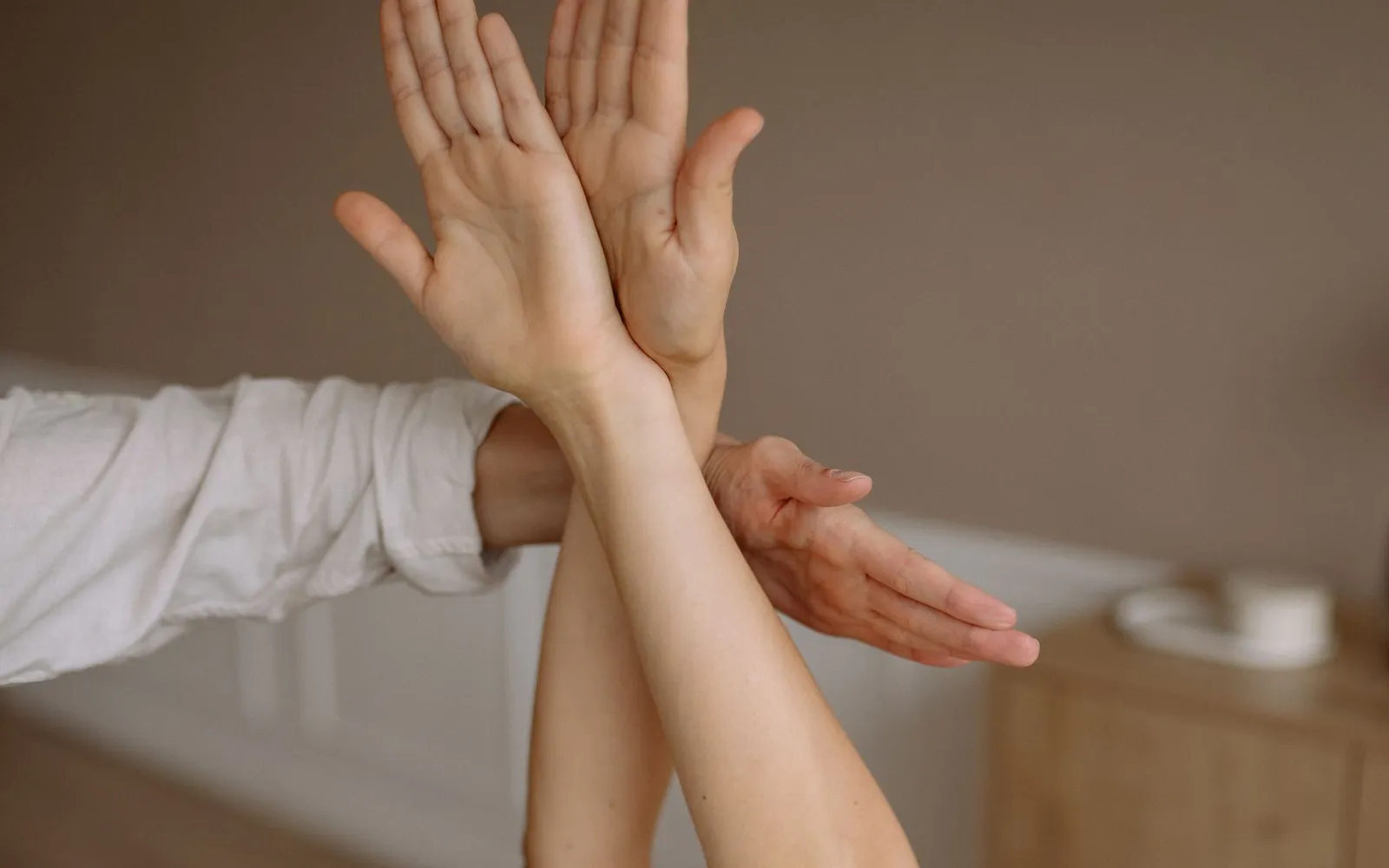
Manual therapy applied to the wrist and forearm

When is it needed?

  • Back- or neck-related pain that increases with movement
  • A sense of impingement and lost movement in the shoulder
  • Stiffness in the back that doesn't ease with movement
  • Referred pain from a trigger point in a specific muscle
  • Increasing stiffness after staying in the same position for a long time

What we do

  • Hands-on testing to identify which tissue the pain is coming from
  • Joint mobilisation targeted at the back and neck
  • Soft-tissue techniques and Graston where needed
  • Trigger-point work
  • Reinforcing the gained movement with exercise in the same session

Manual Therapy in Bursa Nilüfer

Fizyoterapist Aydın Ali provides one-to-one care for manual therapy at the clinic in Bursa Nilüfer — in Fethiye Mahallesi, on Kelebek Sokak, at a central point of Nilüfer, opposite the Fethiye covered market.

It is a short trip by car or public transport from İhsaniye, Odunluk, Balat, Özlüce, Ataevler, 23 Nisan and the surrounding areas. Every session is one-to-one, assessment-based and tailored to you.
What happens before choosing a technique

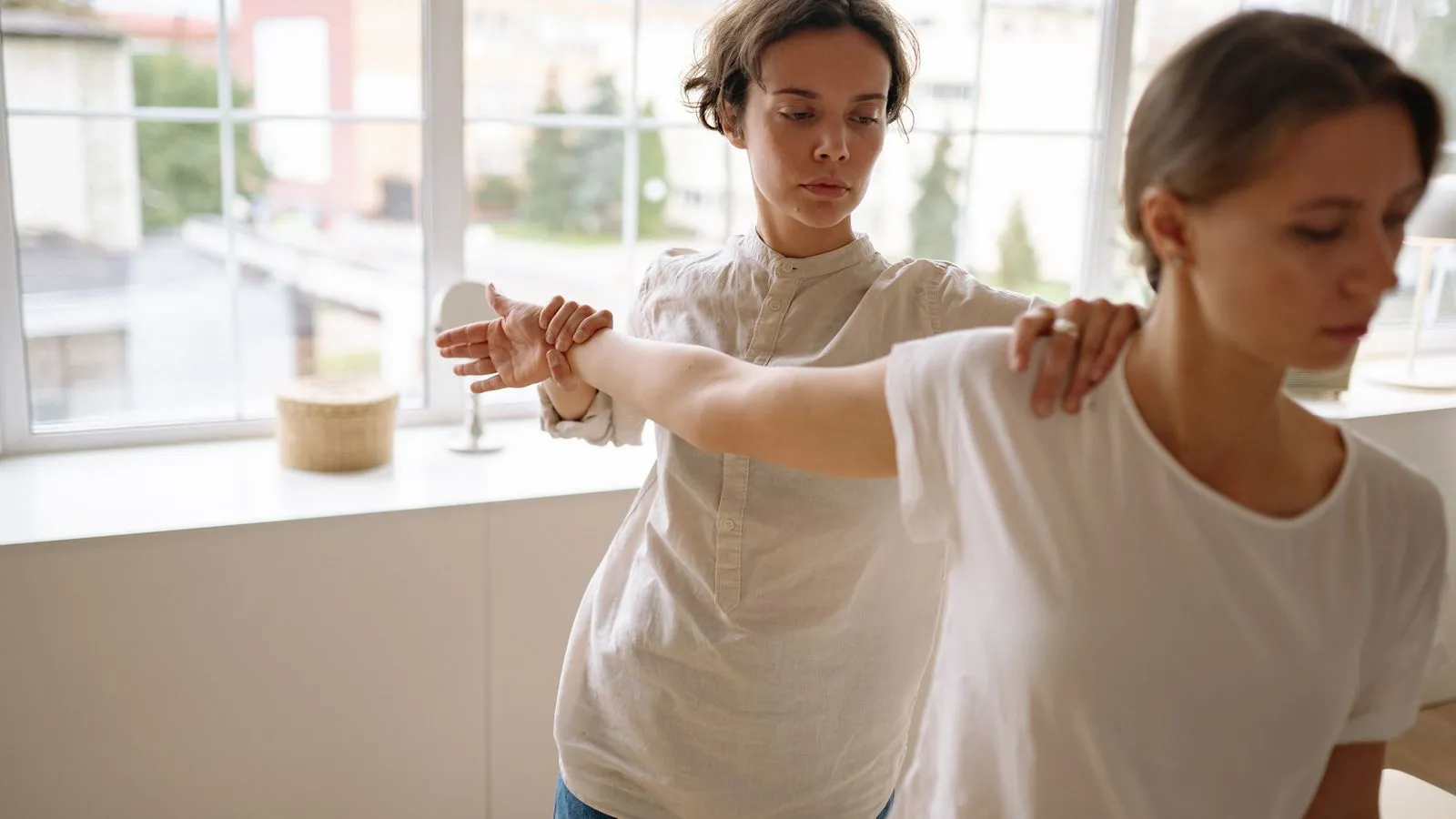
The unseen half of manual therapy is assessment. Which joint is restricted, whether the restriction comes from the muscle or the joint, and which tissue the pain is coming from are all worked out through hands-on testing. Only after that does choosing a technique mean anything.

Fizyoterapist Aydın Ali runs mobilisation, soft-tissue techniques and, where needed, Graston and trigger-point work together for back- and neck-related complaints. The session doesn't end with hands-on work: the range of motion gained is lost within a few days unless it's reinforced with exercise in the same session.

Why does assessment come before technique?

The same complaint can come from a different tissue in different people: a back pain can be joint-related just as easily as muscle-related. Applying a technique without hands-on testing to clarify this — even if the technique itself is correct — ends up aimed at the wrong target.

That's why Fizyoterapist Aydın Ali starts every session with a brief assessment; the choice of technique follows from its result.

When does Graston come into play?

When there's long-standing soft-tissue tightness with suspected adhesion, the instrument-assisted soft-tissue technique (Graston) is added to standard mobilisation. It isn't a treatment on its own; it's used as part of the exercise programme.

Which complaints does it help most?

Back- and neck-related pain that increases with movement, shoulder impingement, back stiffness and referred trigger-point pain are the most common areas. The common thread is that the restricted movement is what's clearing the way for the exercise programme.

What to expect after the session

Range of motion is re-measured after the session and the exercises to do that day are shown. The gain is lost within a few days unless it's supported with exercise.

Who is it not used for?

Manual techniques are not used, or are modified, in active infection, a recent fracture, advanced osteoporosis, suspected tumour in the area, and certain vascular conditions. Especially in the neck region, forceful manipulation applied without assessment carries rare but serious risks. Medical history, medication and diagnoses are asked about in detail at the first session; if an unsuitable picture is found, the technique is changed or a referral is made.

4.9 · 102 Google reviews

Book a one-to-one assessment for manual therapy

Fizyoterapist Aydın Ali · Bursa Nilüfer. Share your complaint; we plan the process together after the assessment.

Frequently asked questions

How many sessions of manual therapy before results show?

It depends on how long the complaint has lasted and its cause; an estimated plan is shared after the first assessment. It's usually planned as one to two sessions a week together with an exercise programme.

What's the difference between Graston and classic manual therapy?

Graston is an instrument-assisted soft-tissue technique; it's added to standard mobilisation when there's long-standing tightness with suspected adhesion. It's used as part of the exercise programme, not on its own.

Which session does the pain start to ease from?

It varies by person and by how long the complaint has lasted; a measurable change in range of motion is expected within the first few sessions, and lasting pain relief comes together with the exercise programme.

Other treatments

  • GTOS Therapy

    A device-assisted manual technique aimed at reducing muscle tension through the sensory organ in the tendon.

  • Graston Technique

    Mobilisation of soft tissue with stainless-steel instruments, carried out together with exercise.

  • Herniated Disc

    An exercise-based, one-to-one physiotherapy programme for back pain and pain radiating into the leg.

Articles on this topic

  • Doğum sonrası nefes, karın ve pelvik taban toparlanma egzersizi

    Pain and Quality of Life

    Postnatal Recovery: Pelvic Floor and Abdomen

    After birth, abdominal and pelvic floor recovery takes time. What diastasis is, when to start exercise, what to watch for, and when to see a doctor.

    15 October 2026 · 3 min read

  • İdrar kaçırmada pelvik taban ve davranış çalışmasına yönelik egzersiz

    Pain and Quality of Life

    What Helps Urinary Incontinence? Types and Physiotherapy

    Incontinence is not one problem; stress and urge types are managed differently. What helps in each type, the role of pelvic floor exercise, and when to see a doctor.

    15 October 2026 · 3 min read

  • Pelvik taban ve nefes çalışmasına yönelik ev egzersizi

    Pain and Quality of Life

    How to Do Pelvic Floor Exercises (Kegels, Done Right)

    Most people do kegels wrong: they squeeze the abdomen or buttocks, not the pelvic floor. How to find the right muscle, where the mistake is, and when it helps.

    15 October 2026 · 4 min read

Book an appointment for Manual Therapy

To book, message us on WhatsApp or call; you do not need to write health details, they are discussed in person.

Book an appointment