
Physiotherapy After Surgery: When Does It Start, How Does It Progress?
Fizyoterapist Aydın Ali · 2 August 2026 · 4 min read · Last updated:
Fizyoterapist Aydın Ali · 2 August 2026 · 4 min read · Last updated:
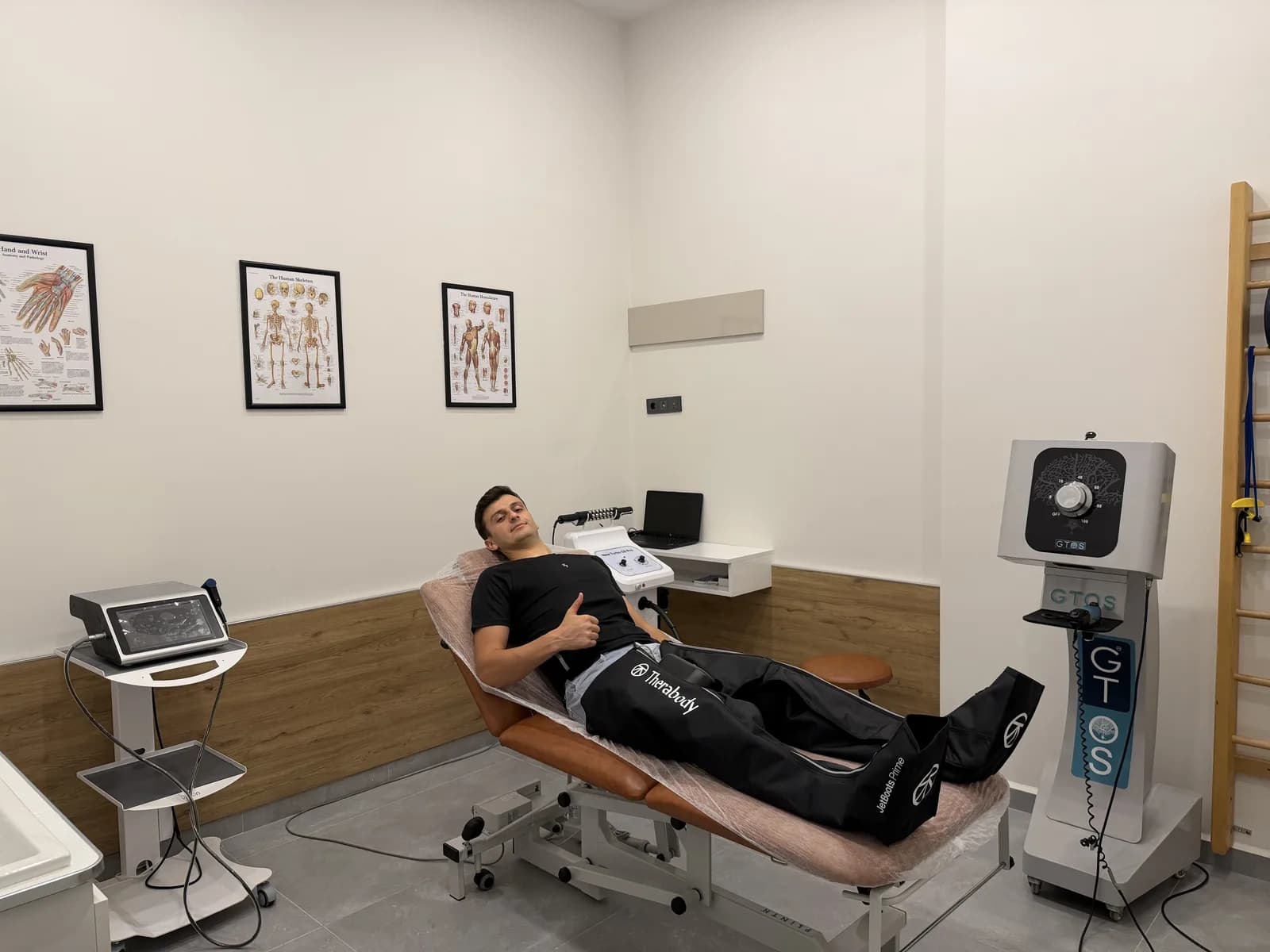
Surgery repairs the joint or tissue; strength, movement and confidence come back through rehabilitation. When to start, how the stages progress, what to bring to the first session.
Physiotherapy after surgery starts from the stage the surgeon's protocol allows, and for most operations an early, controlled start is recommended. Surgery repairs the damaged joint or tissue; but weakness of the surrounding muscles, restricted movement and the feeling of "not trusting that leg or arm" do not go away on their own. A rehabilitation programme that progresses step by step brings these back. Here we answer the questions people in Bursa Nilüfer most often ask about physiotherapy after surgery.
The operating surgeon decides the start. In many orthopaedic operations movement and muscle activation begin in the first days, while still in hospital; the one-to-one programme at the clinic usually follows discharge, within the load and movement limits the surgeon allows. Waiting for weeks "until the stitches are out" can increase muscle loss and joint stiffness, so it is worth asking your surgeon at the first check-up when physiotherapy should begin.
| Stage | Main goal | Example work |
|---|---|---|
| Early | Manage pain and swelling, protect the tissue | Range of motion allowed by the surgeon, muscle activation, correct use of walking aids |
| Middle | Regain movement and strength | Gradual strengthening, joint range of motion, balance |
| Late | Return to daily life, work or sport | Stairs, longer walks, lifting, sport-specific movements if needed |
Moving between stages is based on measurement, not the calendar: range of motion, strength, swelling and the pain response to load are checked at every stage.
| Surgery | Focus of rehabilitation |
|---|---|
| Knee replacement | Full knee straightening and bending, thigh strength, stairs and walking |
| Hip replacement | Following the movement precautions given by the surgeon, hip strength, safe walking |
| ACL reconstruction | Knee movement, thigh strength, balance; return to sport based on testing |
| Meniscus | Loading timeline depends on repair vs removal, knee control |
| Shoulder surgery | After the protection phase, range of motion, shoulder blade and rotator cuff strength |
| After a fracture | Loading according to bone healing, freeing joint stiffness, strength |
| Lumbar disc surgery | Trunk control, gradual loading, sitting and lifting habits |
Which movement is allowed when depends on the type of surgery and the surgeon's preference; the programme is always built on that protocol.
How many sessions does physiotherapy after surgery take? It depends on the type of surgery, the starting point and the goal; it is a process of weeks, sometimes months. Session frequency is reduced as the stages progress and the share of the home programme increases.
Should I exercise while I have pain? Some pain is expected early on. The aim is not to remove pain completely but to keep it at a level that makes movement possible. Movements that clearly and persistently increase pain are stopped; pain medication is decided by the physician.
Is it too late to start months after surgery? No. Starting early is an advantage, but strength and movement can still be clearly regained with a programme started months later.
Is it enough to exercise alone at home? The home programme is the basis of the process; but measuring stage transitions, checking that exercises are done correctly and progressing the programme on time need one-to-one follow-up.
Fzt. Aydın Ali runs physiotherapy after surgery and orthopaedic rehabilitation programmes one-to-one in Bursa Nilüfer, in line with the surgeon's protocol. After knee surgery see also knee rehabilitation, and for ACL rehabilitation after an ACL tear.
Graded, measurement-based rehabilitation for joint problems and the period after orthopaedic surgery.
Strength-focused rehabilitation for meniscus and ligament injuries, cartilage wear and the period after surgery.
The full ACL pathway: preparation before surgery through to a measured, test-based return to sport.