Which Department Should You See for a Herniated Disc?
Fizyoterapist Aydın Ali · 6 September 2026 · 3 min read
Fizyoterapist Aydın Ali · 6 September 2026 · 3 min read
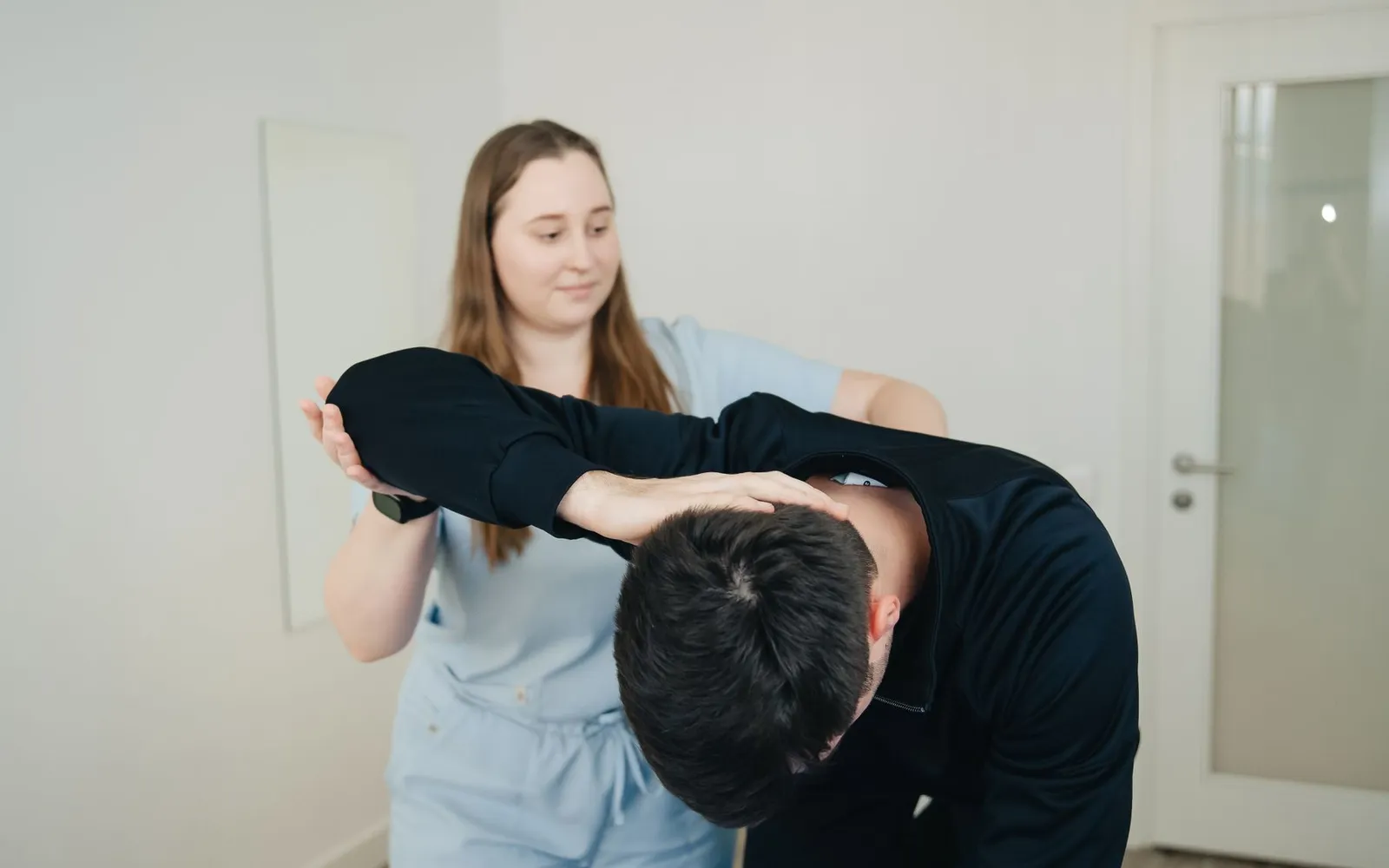
"Which doctor should I see for a herniated disc?" is one of the most common questions. The answer isn't a single department; it depends on the clinical picture.
"I have a herniated disc — which doctor should I see?" is one of the most common questions asked in the clinic and online. The short answer is: there's no single right department. The right place to go depends on the urgency and type of the condition. This article simplifies who to see, and when.
The large majority of herniated discs are not an emergency and improve without surgery. The word "hernia" appearing on an MRI report doesn't, on its own, mean urgency or the need for surgery; a hernia is also seen on the MRI of a portion of healthy people with no complaints at all. So instead of picking a department in a panic, it's better to first look at what the clinical picture actually is.
The one exception is the red flags at the end of this article — if any of those are present, skip comparing departments and go straight to the emergency room.
Several departments in Turkey deal with herniated discs, and their functions differ:
Physical Medicine and Rehabilitation (PM&R). Commonly known as the "physical therapy doctor." This is the department at the centre of the non-surgical path: it assesses, arranges necessary imaging and medication, and directs the physiotherapy and exercise process. If the pain spreads into the leg but there's no urgent finding, this is one of the sensible first stops.
Neurosurgery and Orthopaedics. These are the departments where conditions needing surgery are assessed. They come into play if there's a red flag, or if a long-standing, serious condition hasn't responded to non-surgical methods. "Seeing a surgeon" doesn't directly mean "having surgery" — a surgeon, too, often recommends trying non-surgical treatment first.
Algology (Pain Medicine). This department deals with interventional methods like injections for persistent pain; it usually comes up when other methods have fallen short.
Physiotherapy. A physiotherapist isn't a physician and doesn't make a diagnosis; it's where non-surgical treatment is actually carried out once the source of the pain has been identified. Manual therapy, neural mobilisation, trunk stabilisation and graded exercise are applied here; the process runs together with the PM&R physician.
If there's no red flag, the sensible sequence for most people is:
So the sequence generally runs from non-surgical toward surgical — not the other way around.
The following are rare but serious and require emergency assessment:
If any of these are present, don't waste time comparing departments — go to the nearest emergency room.
The answer to "which department" depends on the clinical picture: if there's an urgent finding, the ER; in most cases, PM&R and physiotherapy running the non-surgical path; surgical departments when needed. The right sequence is to start with the least invasive method and move forward as needed.
Fzt. Aydın Ali first assesses the source of the pain in a herniated disc; runs the non-surgical process in person and refers conditions that need surgery to the relevant physician.

Orthopaedics and Rehabilitation
Chiropractic and manual therapy are often confused. Both are done with the hands, but their approaches and frameworks differ.
6 September 2026 · 2 min read
Orthopaedics and Rehabilitation
The sharp heel pain on the first step in the morning is often assumed to be a heel spur. But the real name for this condition is plantar fasciitis, and the two aren't the same thing.
6 September 2026 · 2 min read
Orthopaedics and Rehabilitation
Flat feet aren't a disease in most people and cause no complaint. The real question is whether they're leading to a problem.
6 September 2026 · 1 min read
An exercise-based, one-to-one physiotherapy programme for back pain and pain radiating into the leg.
For back pain that persists without a clear imaging finding: a programme that looks for the source.
For pain travelling from the back into the hip and leg: assessment that identifies the source, then graded exercise.