What Helps a Heel Spur? At Home and in Daily Life
Fzt. Aydın Ali · 1 September 2026 · 6 min read · Last updated:
Fzt. Aydın Ali · 1 September 2026 · 6 min read · Last updated:
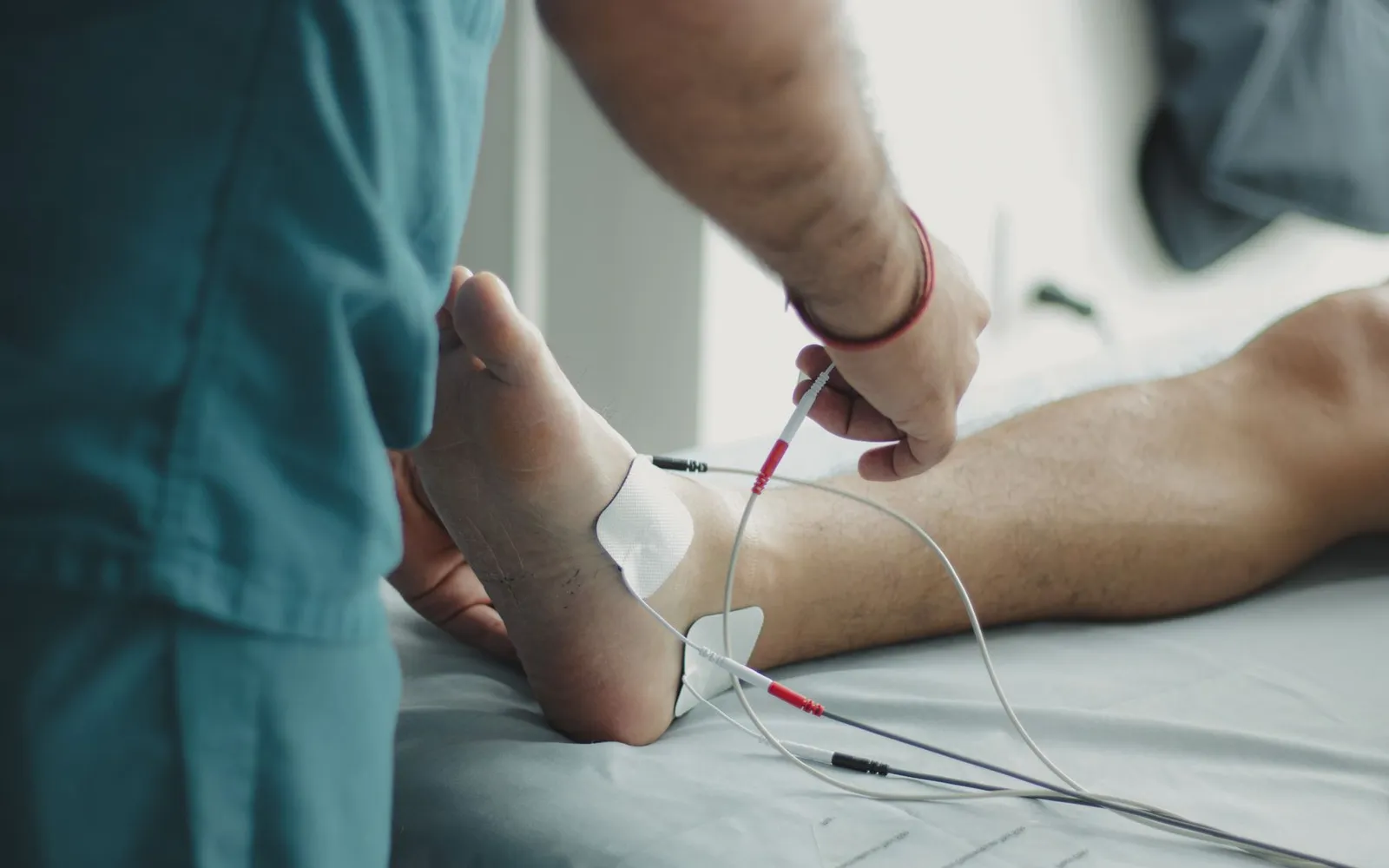
In heel spur pain, the culprit is usually not the bony spur but an overloaded band of tissue under the foot. What really helps follows from that.
A heel spur is a bony projection on the underside of the heel bone seen on X-ray. The name suggests it causes the pain, but for most people it does not: spurs are found in people with no pain, and the real source is overload of the plantar fascia, the band of tissue running from the heel to the toes. This is called plantar fasciitis and is the most common cause of heel pain.
This distinction decides what will help. If the spur is blamed, expectations drift towards "removing the spur". But if the problem comes from an imbalance between the load on the tissue and its capacity, the solution is to restore that balance: reduce load and build capacity.
The most familiar symptom is a sharp heel pain with the first steps out of bed. It eases after a few steps and returns with long periods of standing. During sleep the foot points down and the plantar fascia stays shortened; in the morning full load suddenly stretches it. The same happens when standing up after long sitting.
| What to do | Why it works | Practical tip |
|---|---|---|
| Adjust load | Tissue cannot recover without rest | Break up long standing; avoid walking barefoot on hard floors |
| Suitable footwear | Reduces impact on the heel | Cushioned, arch-supported, slightly raised heel; slippers at home too |
| Insoles | Spread load more evenly | Ready-made silicone heel cups or supportive insoles suffice for many |
| Morning stretch | Reduces first-step pain | Before getting up, pull your toes towards you and hold 30 seconds |
| Strengthening | Builds tissue capacity, prevents recurrence | Calf and foot sole muscles, gradually |
| Ice | Short-term relief | At the end of the day, 10-15 minutes through a thin cloth |
| Weight management | Less load on the heel with every step | Even a small reduction can make a difference |
None of these is a miracle on its own; they work when done together and consistently. Stretching relieves; strengthening prevents recurrence.
A mild stretch sensation is expected. Sharp, stabbing pain or an increase that carries into the next day means the load was too much; reduce repetitions and intensity. For a stage-based programme see plantar fasciitis and how it differs from a heel spur.
In jobs with long hours on your feet, such as retail, healthcare, kitchens or production, heel pain can be more stubborn. Small changes help a lot: a few short sitting breaks, changing shoes midday, a soft mat where you stand and a brief calf stretch during breaks. These do not replace the exercise programme but protect its effect.
Heel pain is most common in middle age. Standing all day at work, sudden weight gain, tight calf muscles, starting activity abruptly or increasing walking-running distance quickly, and worn, unsupportive shoes are the main risk factors. Most of these can be changed, so a large part of treatment is adjusting them.
For some people with very marked first-step pain, night splints that keep the foot slightly bent upwards during sleep can be used. The aim is to stop the plantar fascia staying shortened overnight. Not everyone needs one and some find it uncomfortable, so it is recommended after assessment, for a short period if needed. Taping is another aid that can give short-term relief.
If symptoms have lasted weeks and the exercise programme has not brought the expected response, ESWT (shockwave therapy) may be considered. It is one of the most commonly used device treatments for heel pain, but it makes sense alongside exercise, not instead of it. We explain when ESWT is considered for heel and tendon pain in a separate article.
For most people heel pain eases clearly within weeks to a few months; when it has lasted months, recovery can take longer. What matters most is how early the load is adjusted and how consistently the programme is followed.
If heel pain has not settled in a few weeks, limits walking or returns with the same intensity every morning, an assessment is worthwhile. It separates pain from the plantar fascia from other sources such as the Achilles tendon, the heel fat pad or a trapped nerve, and the programme is built on that. See heel spur treatment for details.
Numbness in the heel, pain that increases at rest at night, fever or marked swelling may point to a different cause; a doctor's assessment comes first in that case.
Does a heel spur need surgery? Very rarely. Since the spur itself is usually not the source of pain, most people recover without surgery.
Which doctor should I see for a heel spur? For diagnosis and medication, a physical medicine and rehabilitation specialist or an orthopaedic surgeon. The exercise programme and load adjustment are run with a physiotherapist; for most people both go together.
Do creams help a heel spur? Pain-relief creams can give short-term relief but do not build the tissue's capacity. A doctor or pharmacist decides which is suitable.
Do I need insoles or special slippers? Silicone heel cups or arch-supporting insoles make walking more comfortable for most people; supportive slippers at home instead of going barefoot can also reduce morning and evening pain.
Which shoes help a heel spur? Cushioned, arch-supported shoes with a slightly raised heel that hold the foot well relieve most people. Completely flat, thin-soled shoes can make it worse.
Is heat or cold better? Cold gives short-term relief for pain and tenderness at the end of the day; for morning stiffness, warmth and stretching may feel more comfortable.
Fzt. Aydın Ali first identifies the source of heel pain, then runs a programme that adjusts load and strengthens the tissue, combined with ESWT when appropriate.
Spinal Health
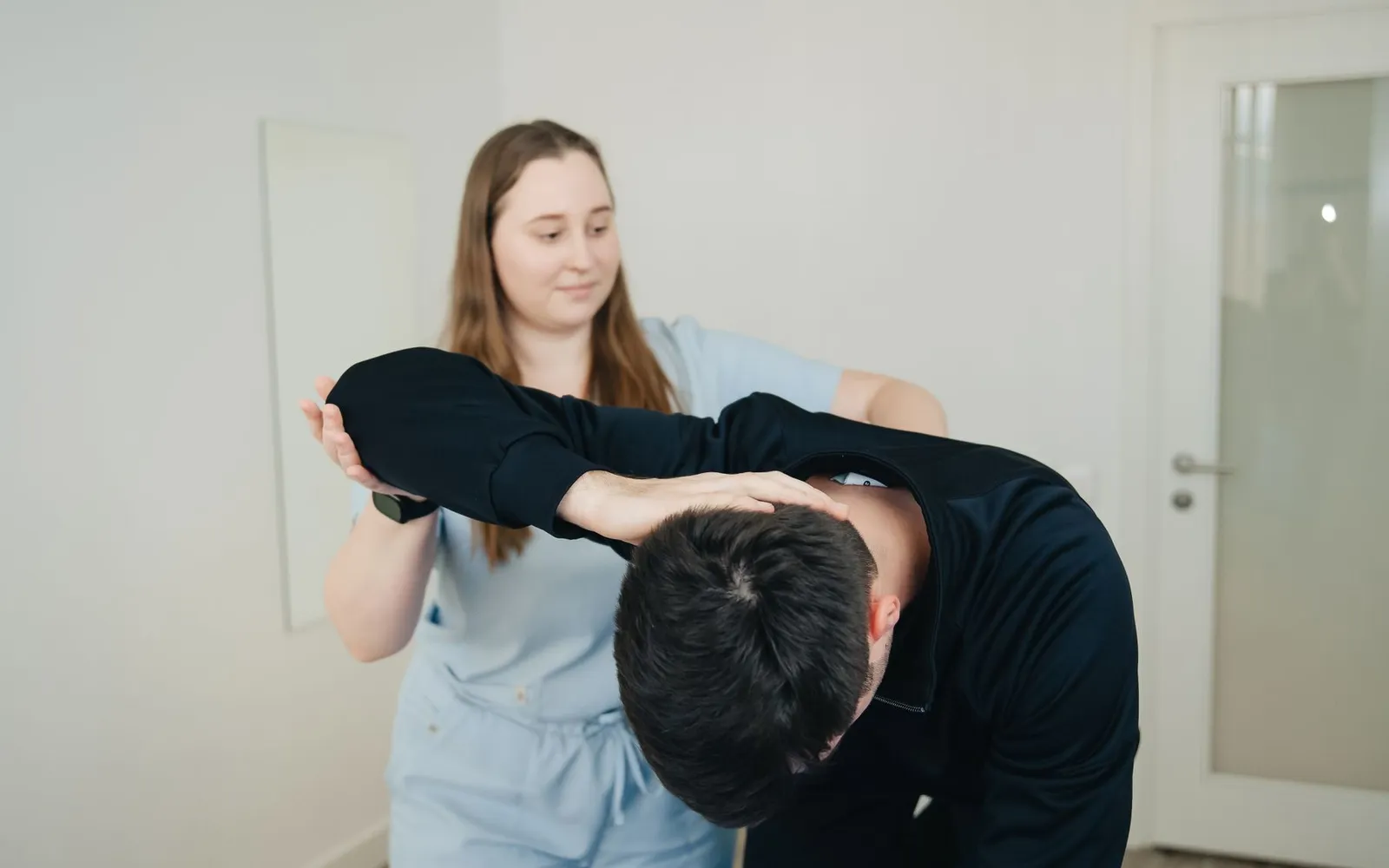
Seeing 'discopathy' on an MRI report does not on its own mean a serious disease. What the term means, how to read the other phrases, and when it matters.
14 October 2026 · 4 min read
Spinal Health
Most cervical disc herniations settle without surgery. Tracking where the pain travels down the arm, a neck-friendly daily routine and the right exercise are the basis.
14 October 2026 · 5 min read
Orthopaedics and Rehabilitation
“Physical medicine” and “physiotherapy” are often confused. Which one is the physician's job, which is the physiotherapist's — and which do you need?
9 October 2026 · 2 min read
Graded, measurement-based rehabilitation for joint problems and the period after orthopaedic surgery.
Strength-focused rehabilitation for meniscus and ligament injuries, cartilage wear and the period after surgery.
For heel pain that bites on the first step of the morning: shockwave, load management and a graded strengthening programme.