
What Helps a Stiff Neck? What You Can Do at Home
Fizyoterapist Aydın Ali · 31 August 2026 · 3 min read · Last updated:
Fizyoterapist Aydın Ali · 31 August 2026 · 3 min read · Last updated:
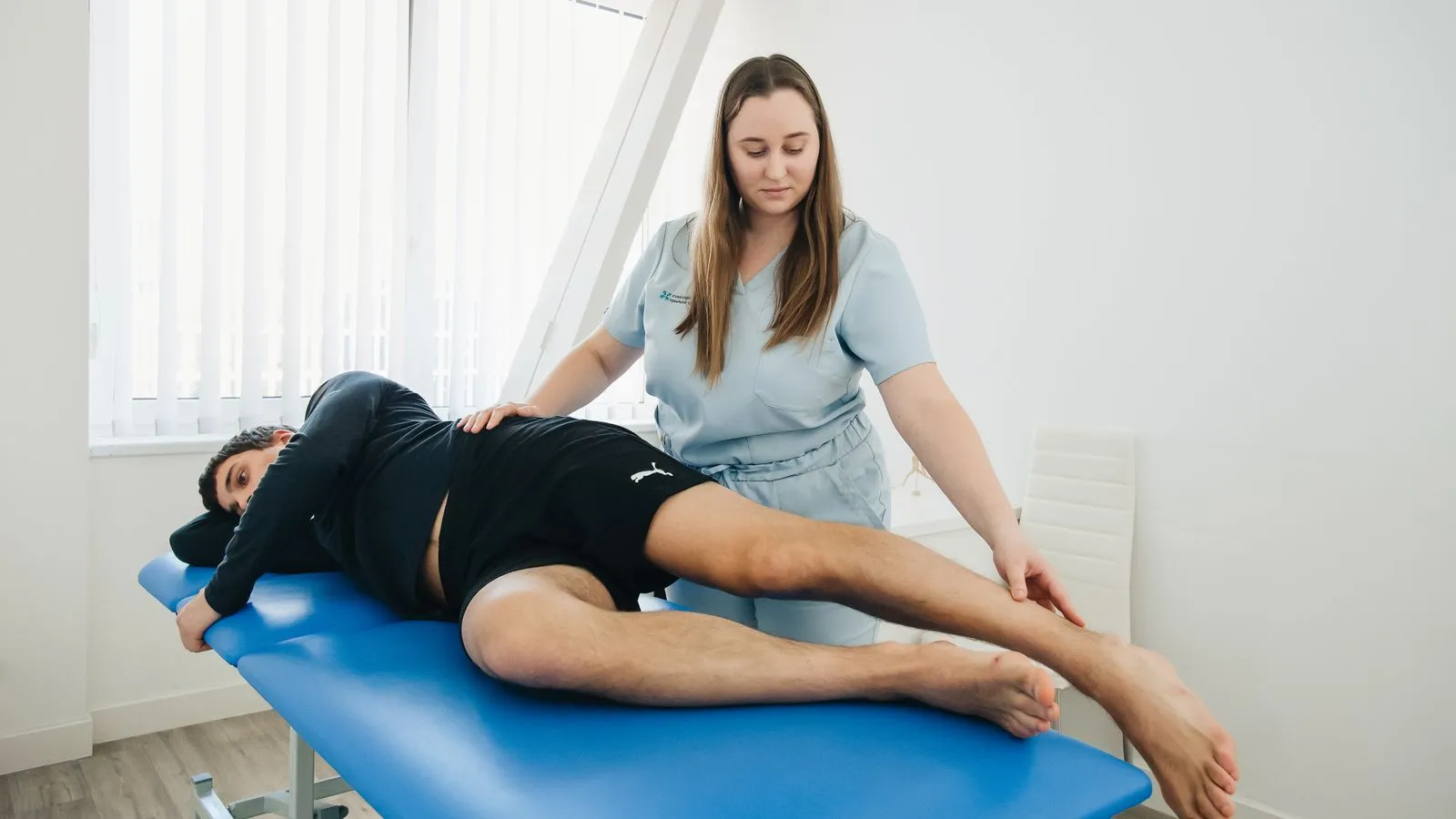
A stiff neck usually settles within a few days. What helps in the first days, which movements are safe, and when should you see a physiotherapist or doctor?
What helps a stiff neck most is warmth, moving the neck gently within the range pain allows, breaking up screen and phone time, and sleeping on a pillow that keeps the neck straight. Most stiffness that starts on waking or after a sudden movement settles on its own within a few days; you can make that time easier and reduce recurrence.
| What to do | How | Why |
|---|---|---|
| Warmth | 15–20 minutes, with a thin cloth between skin and source | Relaxes muscle tension |
| Gentle movement | Turning and tilting the head within the pain-free range, without forcing | Complete rest increases stiffness |
| Screen breaks | Every 30–40 minutes, straighten the head and relax the shoulders | A forward head tires a stiff neck more |
| Pillow height | A height that keeps the neck in line with the body | Helps the muscles rest at night |
Heat or cold? With a stiff neck most people benefit from warmth. In the first hours after a sudden strain, cold can be tried; use whichever reduces the pain.
These are general, low-risk movements. Stop any movement that clearly increases pain or sends numbness down the arm.
If it lasts longer than 3–4 days, keeps coming back, or comes with pain and numbness spreading into the arm, an assessment is needed. Recurring stiffness often points to posture habits and a strength imbalance in the neck and upper back. Stiff neck physiotherapy in Bursa supports joint mobility with manual therapy, then builds a neck and upper back strength programme that reduces recurrence.
How many days does a stiff neck last? Most stiffness eases noticeably within a few days and largely resolves within a week. Stiffness lasting longer than a week, or recurring, should be assessed. More: how a stiff neck settles.
Which pillow should I use? One whose height keeps the neck in line with the body whether lying on your back or side; when side-lying, roughly the width of your shoulder. More: how to sleep with back and neck pain.
How do I tell a stiff neck from a herniated disc? A stiff neck is usually muscular and the pain stays in the neck. If pain spreads to the arm or fingers, or numbness appears, a nerve root is considered: how a neck herniated disc heals.
Fzt. Aydın Ali runs one-to-one programmes in Bursa Nilüfer for recurring neck stiffness that address not only the current episode but also why it keeps coming back.

Spinal Health
Most cervical disc herniations settle without surgery. Tracking where the pain travels down the arm, a neck-friendly daily routine and the right exercise are the basis.
14 October 2026 · 5 min read
Orthopaedics and Rehabilitation
“Physical medicine” and “physiotherapy” are often confused. Which one is the physician's job, which is the physiotherapist's — and which do you need?
9 October 2026 · 2 min read
Orthopaedics and Rehabilitation
Licence, one-to-one work, starting with an assessment, realistic expectations… The concrete criteria to look for when choosing the right physiotherapist.
7 October 2026 · 3 min read
An exercise-based, one-to-one physiotherapy programme for back pain and pain radiating into the leg.
A programme focused on posture and the deep neck muscles for pain spreading into the neck, shoulder and arm.
For pain travelling from the back into the hip and leg: assessment that identifies the source, then graded exercise.