What Is Shoulder Impingement Syndrome?
Fizyoterapist Aydın Ali · 15 October 2026 · 3 min read
Fizyoterapist Aydın Ali · 15 October 2026 · 3 min read
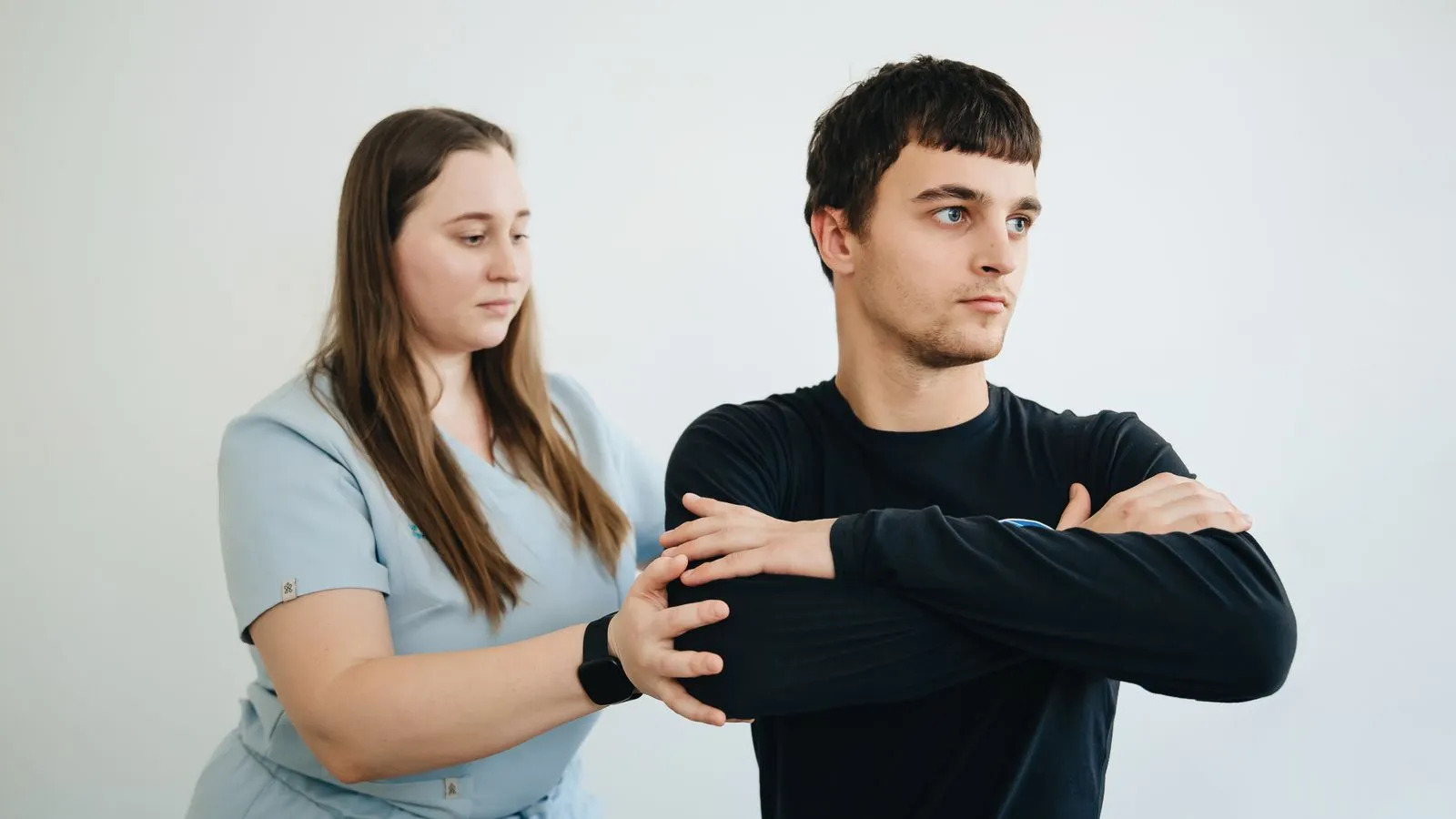
Catching pain at a certain angle when raising the arm to the side is often shoulder impingement. Why it happens, what to do at home, and when to see a doctor.
Shoulder impingement syndrome is a catching pain felt at the front-outer part of the shoulder at a certain angle when raising the arm to the side or up. It appears when the tendon and the cushion called the bursa at the top of the shoulder joint are compressed under the bony roof. The good news: in most people it eases clearly without medication or surgery, by adjusting load and strengthening the scapular and shoulder muscles.
The three things that help most with impingement:
Exercise should not cross the pain threshold; "no pain, no gain" does not apply to impingement.
New, load-related impingement can ease clearly within a few weeks with the right programme; in long-standing cases with tendon wear, it can take longer. The timing depends most on how early overhead load is reduced and on the programme's regularity.
These are confused but differ. Pain at a certain angle when lifting the arm while range of motion is preserved suggests impingement; both pain and marked loss of movement may be frozen shoulder; pain spreading to the arm/fingers with numbness may originate from the neck or a nerve. For the distinction see nerve compression in the shoulder or from the neck and frozen shoulder.
Being unable to lift the arm after a fall/impact, marked loss of strength, severe pain that does not settle at night, or fever-swelling need a medical assessment first.
In the shoulder assessment, it is separated whether the pain is impingement or another cause; if impingement, a gradual programme focused on the scapula and rotator cuff is built and tracked with measurements.
Does impingement need surgery? For most people, no; it eases with a structured exercise programme. Surgery is considered by a physician in specific cases that do not respond for a long time.
Does a cortisone injection fix it? It can reduce pain for a while but does not solve the cause on its own; the decision belongs to the physician, and an exercise programme is still needed.
Fzt. Aydın Ali adjusts overhead load for shoulder impingement in Bursa Nilüfer and runs a one-to-one programme that strengthens the scapular and rotator cuff muscles.
Orthopaedics and Rehabilitation
Pain spreading to the shoulder and arm with numbness often comes not from the shoulder itself but from the neck. How to tell them apart, what helps, and when to see a doctor.
15 October 2026 · 3 min read
Orthopaedics and Rehabilitation
Shoulder pain has more than one cause. Impingement, frozen shoulder or referred from the neck? What helps in each, what to do at home, and when to see a doctor.
15 October 2026 · 4 min read

Pain and Quality of Life
After birth, abdominal and pelvic floor recovery takes time. What diastasis is, when to start exercise, what to watch for, and when to see a doctor.
15 October 2026 · 3 min read
Graded, measurement-based rehabilitation for joint problems and the period after orthopaedic surgery.
Strength-focused rehabilitation for meniscus and ligament injuries, cartilage wear and the period after surgery.
For heel pain that bites on the first step of the morning: shockwave, load management and a graded strengthening programme.